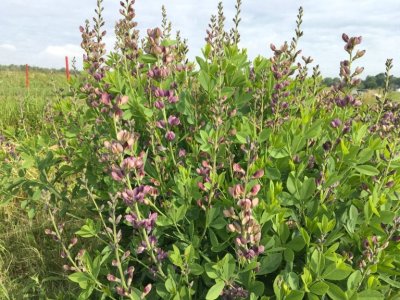
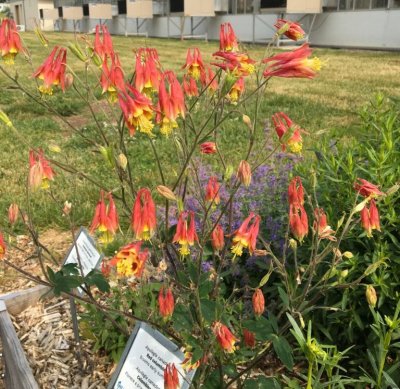
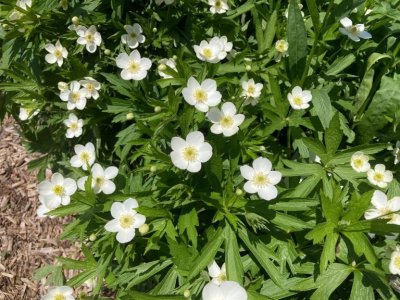
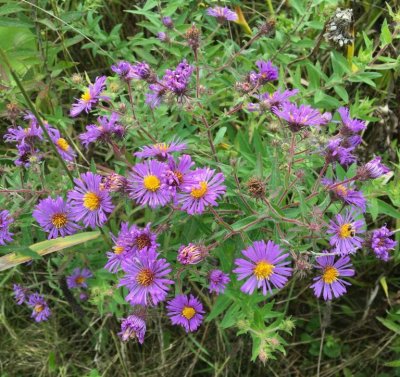
What’s so great about native plants?
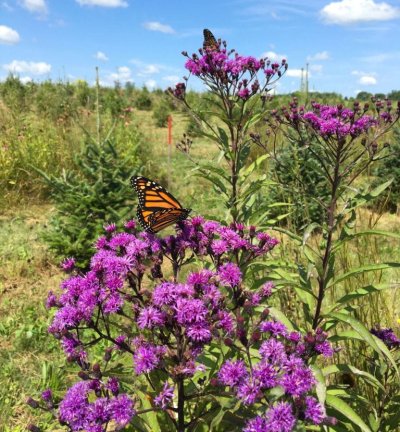
There are many benefits to native plants. Some insects (and other animals) depend on a relatively small number of plant species – ones they co-evolved with – for food. Assuming they continue to be well-adapted to an area as climate changes, native plants may be more resistant to local pests (diseases, insects, and herbivores). This can mean fewer pesticide applications to keep the plants healthy. Native plants can also be more resilient to abiotic stressors. For example, in a geographic area prone to drought, native plants will likely require less water.
Are native plants better than non-native plants?
Short answer: no.
Plants not native to a geographic area can still be important for the local ecosystem. For example, while some bee species are specialists and require pollen or nectar from only certain plants, others benefit from more pollen and nectar, regardless of the plant. And it’s not just plants that move around. Insects move, too. Honey bees are not native to the U.S., even though there are many established wild and domestic populations. Honey and other bees face a variety of threats and benefit from more available pollen and nectar.
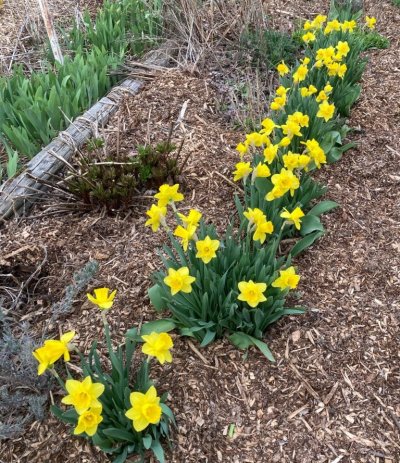
And when you choose plants, the enjoyment you derive from growing a beautiful flower (perhaps one with sentimental value, even if it isn’t native to where you live now) is important, too. I never want to “garden shame” someone by implying they should feel guilty for wanting to grow some daffodils (native to northern African, Europe, and parts of Asia) in NY. A few weeks ago, I even found some minute pirate bugs enjoying daffodils I had cut for the dining room table. Just please don’t plant invasive species in your garden.
This idea is not original to me, but sometimes I worry that when we focus too much on the benefits of native plants, we might accidentally be communicating that similar principles apply to people. People who have lived in a particular geographic area longer are not better or more valuable than those who have moved there more recently. Few people who live in the U.S. now are native to their current geographic area. Only about 3% of the population identify as Native American or Alaskan Native. But there are too many places and situations where people born in the U.S. get better treatment than those who moved here. That’s not right.
Happy Native Plant Month!
So, by all means, let’s celebrate native plants. Let’s appreciate their beauty and the (sometimes unique) roles they play in our ecosystems. Let’s plant more of them. Let’s plant more flowers, shrubs, and trees in general! And let’s stop judging – people and plants – only by where they’re from.